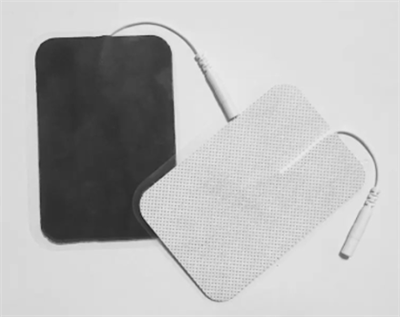
Choosing the right size of therapeutic electrode pads is far more complex than simply "bigger or smaller." A 3×3cm pad and a 6×6cm pad, with a three-fold difference in area, represent completely different treatment logics-one is like a "sniper rifle," delivering precise strikes; the other is like a "shotgun," covering a large area. Choosing the wrong size will either miss the intended target or irritate the wrong areas. Today, we'll break down how to properly use these two "kings."
I. 3×3cm Small Square: Precise Point Pressing, Targeting Local Lesions
Applicable Scenario 1: Acupoint Stimulation. In Traditional Chinese Medicine acupoint therapy, each acupoint is only the size of a soybean to a peanut. A large 6×6cm square might cover three or four acupoints simultaneously, stimulating the intended points while also activating others, easily causing "cross-stimulation" and abnormal sensations. A 3×3cm square, however, can precisely target a single acupoint.
Applicable Scenario 2: Small Joints and Peripheral Areas Areas with many bony prominences and small skin areas, such as finger joints, the ulnar side of the wrist, the inner and outer sides of the ankle, and the temporomandibular joint (hook), are prone to injury. A 6x6cm patch either hangs precariously or crosses the joint, causing the current to concentrate at the edges and corners, resulting in stinging. A 3x3cm patch fits firmly between the smooth bone surface, providing good adhesion and even current distribution.
Suitable for: Localized injuries with extremely small pain points. For example, the lateral epicondyle pain point in tennis elbow or the medial calcaneal pain point in plantar fasciitis, covering an area no larger than a coin. Using a large patch can cause the current to simultaneously stimulate healthy muscle tissue around the pain point, potentially leading to protective contraction and reducing effective stimulation of the target area. A small patch allows for precise targeting, making it more efficient.
The 3x3cm patch has a higher current density. For those with sensitive skin or using high-power devices, it is recommended to start with the lowest setting to avoid sudden stinging.
II. 6×6cm Large Square: Extensive Coverage, Specifically Treating Muscle Strain
The 6×6cm square is a medium-to-large-sized surface electrode pad for physiotherapy. Its core advantages are uniformity and high efficiency.
Usage Scenario 1: Diffuse lower back pain. Many lower back pains are not localized to a single point, but rather cover a large area-simultaneously straining the erector spinae, quadratus lumborum, and latissimus dorsi muscles. Using a small 3×3cm square requires three or four applications, treating different areas, which is time-consuming and laborious. A 6×6cm pad covers a radius close to the size of a palm, relaxing multiple muscles in one treatment.
Menstrual cramps, chronic pelvic inflammatory disease, and postpartum uterine involution all require stimulation of a larger area of the abdomen. The flat, large surface area of the abdominal skin allows the 6×6cm pad to provide a stable electric field distribution. Smaller squares tend to create "point-like strong stimulation," causing patients to feel a throbbing sensation in their abdomen, which is very uncomfortable.
Usage Scenario 3: Elderly people and those with poor skin tolerance. Elderly individuals often have thinner subcutaneous fat and drier skin, making them more susceptible to burns or stinging from excessively high current density when using small therapeutic electrode pads. A 6×6cm electrode pad distributes the current over a larger area, significantly reducing the energy required per unit area, resulting in a gentler sensation and better treatment adherence.
Precautions: 6×6cm therapeutic electrode pads should not be used on bony prominences or joints. Using them on such areas, with only the edges in contact with the skin and the center suspended, actually increases the risk of burns compared to smaller pads.