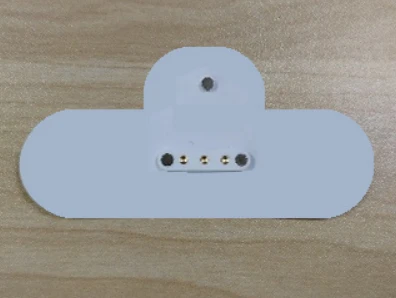
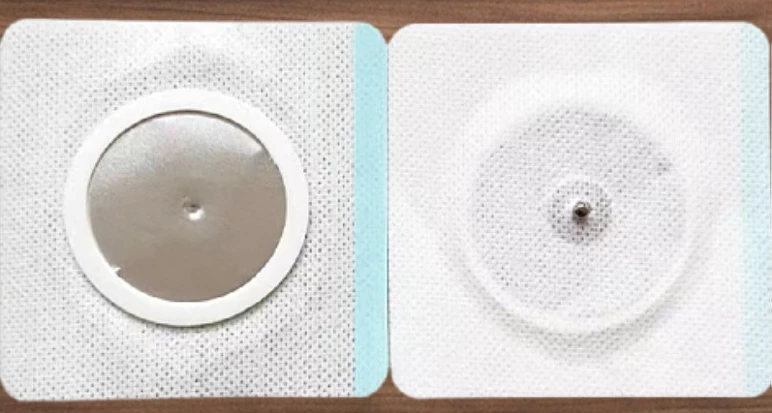
Why is it that patches with identical appearances can sometimes lead to a loss of therapeutic efficacy or trigger frequent allergic reactions-or, in other cases, even cause physical therapy devices to malfunction and shut down automatically? The "center-cutout" design is merely a structural feature; in reality, patches used for applying traditional Chinese medicinal (TCM) preparations and conductive electrodes used for physical therapy represent two entirely distinct systems for transdermal drug delivery (or therapeutic intervention).
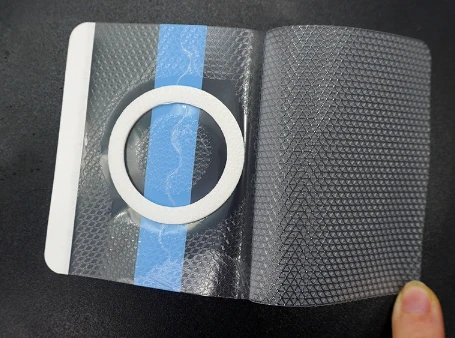
Center-Cutout Adhesive Patches (Designed for Topical Ointments, Creams, or Powders)
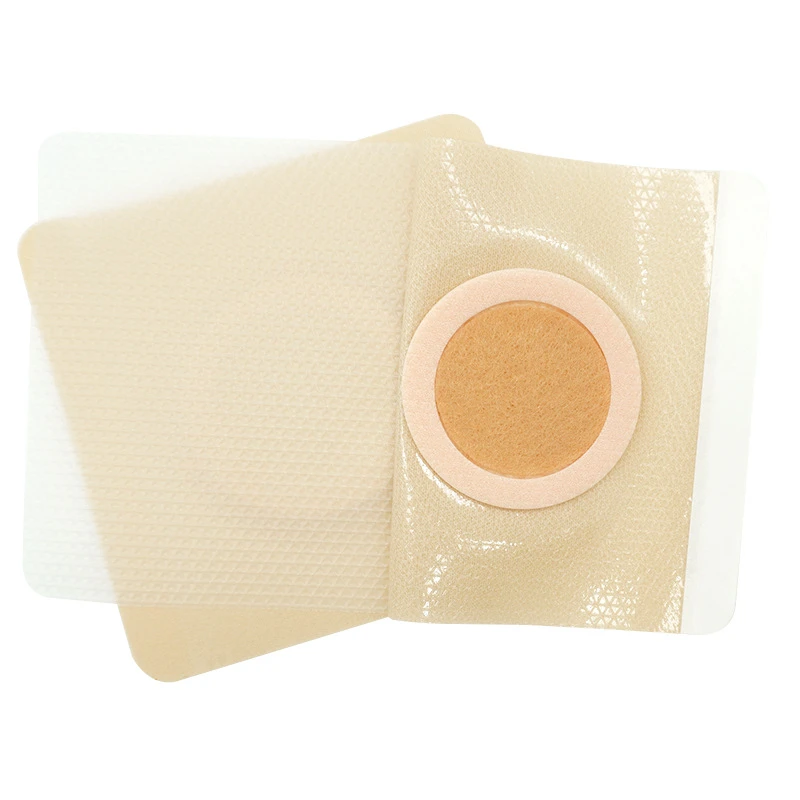
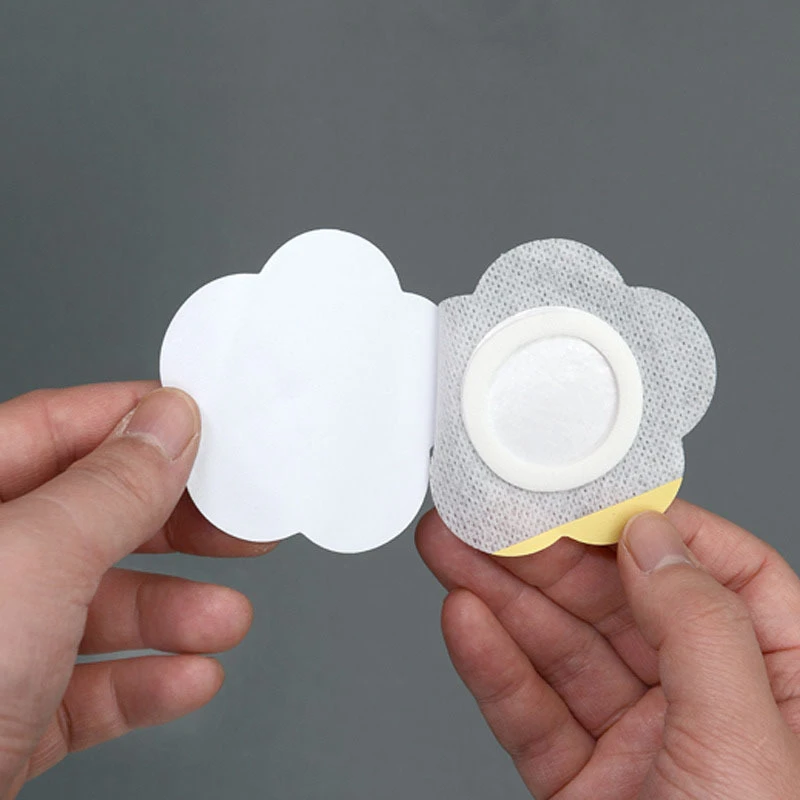
As a passive topical carrier, this product contains no conductive components. Its standard waterproof polyurethane (PU) version features a five-layer composite structure: an easy-to-remove protective film, a PU backing film, a medical-grade pressure-sensitive adhesive layer, a leak-proof foam gasket, and a glassine release paper. The product offers a variety of options regarding base materials, adhesives, and other customizable parameters, as detailed below:
|
Item |
Available Options |
|
Base Material |
Non-woven fabric, spunlace fabric, cotton cloth, elastic fabric, polyurethane (PU), polyethylene (PE), foam, silk or silicone gel |
|
Adhesive System |
Acrylic adhesive, silicone gel |
|
Customizable Items |
Outer contour, finished product dimension, central hole diameter, thickness and specification of leakage-proof gasket |
A foam gasket forms a self-contained reservoir, allowing ointments, creams, or powders to be placed within the open cavity. When applied to the target site, the medication is delivered through the skin's natural permeability. The leak-proof gasket restricts the spread of the formulation, preventing it from leaking onto clothing, while simultaneously isolating the medication from the surrounding healthy skin to minimize the risk of irritation in non-target areas.
Key Advantages
1. Broad compatibility: Free of conductive components, the material does not undergo physical or chemical reactions with various topical creams, ointments, or powders, ensuring the stability of the medication.
2. Dual-adhesive system options: Silicone-based adhesives are hypoallergenic and leave no residue upon removal; acrylic-based adhesives offer long-lasting adhesion, suitable for extended wear across various skin types.
3. Comprehensive substrate range: Non-woven fabrics provide excellent breathability for long-term wear; PU films offer waterproof protection; and elastic fabrics allow for movement, making them ideal for application over joints.
4. Integrated foam leak-proof gasket: Effectively isolates the treatment area from the surrounding skin, reducing the risk of irritant dermatitis caused by the spread of the medication.
5. Customizable design: Supports irregular die-cutting and various aperture sizes to accommodate specific dosage requirements for different formulations.
These "blank" (empty) medicated patches are distinct from hollow microneedle patches. Microneedle patches contain tiny needle structures, whereas these hollow patches serve as carriers for topical applications. They are also different from conductive electrode patches, which utilize a hydrogel layer and a snap connector or lead wire to deliver electrical stimulation. Omori manufactures both hollow carrier patches and conductive electrode patches, though each is designed to address different needs.
Hollow-Design Physiotherapy Electrode Patches (Compatible with Targeted Drug Delivery and Medium-Frequency Physiotherapy Devices)
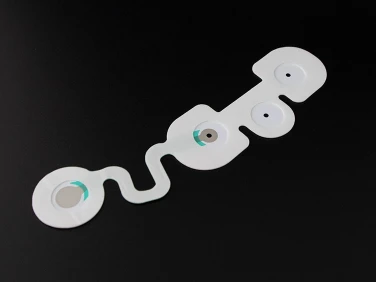
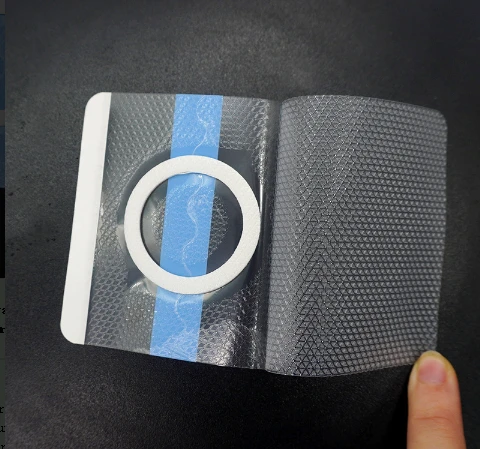
Featuring a central aperture, these hollow-design surface electrodes integrate a conductive functional layer. Their construction consists of a backing substrate, a conductive carbon ink or conductive fabric layer, an annular conductive hydrogel, a leak-proof foam gasket, a conductive lead (snap or pin connector), and a protective release liner. Available options for substrates, hydrogel materials, and customizable parameters are as follows:
|
Item |
Available Options |
|
Base Material |
Spunlace non-woven fabric, elastic fabric, PU film, PE film, hot-rolled non-woven fabric |
|
Adhesive System |
Acrylic adhesive, silicone gel |
|
Customizable Items |
Outer contour, finished product dimension, central hole diameter, leakage-proof gasket specification, conductive connector type, impedance range |
A medicated pad is placed within the designated opening; once applied, the device is connected to a medium-frequency or targeted drug-delivery therapeutic unit via snap fasteners or pin connectors. Upon activation, the annular conductive layer generates a uniform electric field, facilitating the penetration of the medication through the stratum corneum of the skin via iontophoresis, thereby enhancing transdermal delivery efficiency.
Key Advantages
1. The conductive layer application process is stable, ensuring high impedance consistency across batches and a uniform electric field distribution. It is compatible with mainstream TENS, targeted drug-delivery, and medium-frequency therapeutic devices, reducing the likelihood of equipment error alerts.
2. The conductive hydrogel exhibits excellent biocompatibility and withstands repeated pulse stimulation, making it well-suited for frequent clinical use in medical facilities.
3. An anti-seepage gasket prevents the medicinal solution from infiltrating the conductive layer, protecting the conductive medium from moisture-induced impedance drift and ensuring stable electrical stimulation performance.
4. The conductive interface supports both snap-fastener and 2.0mm/2.5mm pin-type connections, accommodating the interface standards of various therapeutic device brands.
5. The substrate, adhesive layer, and opening dimensions are fully customizable to meet diverse requirements, such as breathability, water resistance, and high elasticity.
OMORI Custom Solutions: One-Stop Development for Two Types of Hollow-Design Dressings
Developing topical transdermal formulations and targeted therapeutic electrodes separately often leads to complex communication, extended sampling timelines, and inconsistent quality standards.
OMORI specializes in flexible medical adhesive dressings and therapeutic electrodes. Operating within a Class 100,000 (ISO 8) cleanroom and equipped with in-house coating and die-cutting production lines-all compliant with CE and ISO standards-we offer integrated, simultaneous customization for both product categories:
✅ Blank Transdermal Patches: Tailored development of substrates, adhesive systems, shapes, apertures, and anti-leakage structures.
✅ Hollow-Design Therapeutic Electrodes: Custom specifications for impedance, hydrogel formulations, connectors, and substrate materials.
Our comprehensive OEM/ODM service covers everything from initial project assessment and sample development to pilot runs and full-scale mass production. With a single point of contact and unified quality control, we help bring your topical products to market efficiently.
We provide customized solutions tailored to your specific formulations, drug-delivery protocols, or device parameters. Please reach out to us for technical consultation or to request samples for testing.